

The complete guide
Choosing an Object Permanence Box for Your Toddler
When hiding something becomes part of the fun
A toddler posts a toy into a container, looks inside, then wants to do it again. That small routine can hold their attention more than an activity with lots of steps. The action is clear, and there is something to find at the end.
An object permanence box gives that interest a place to go. A piece disappears into the box, but it has not gone away. Opening a door brings it back into view.
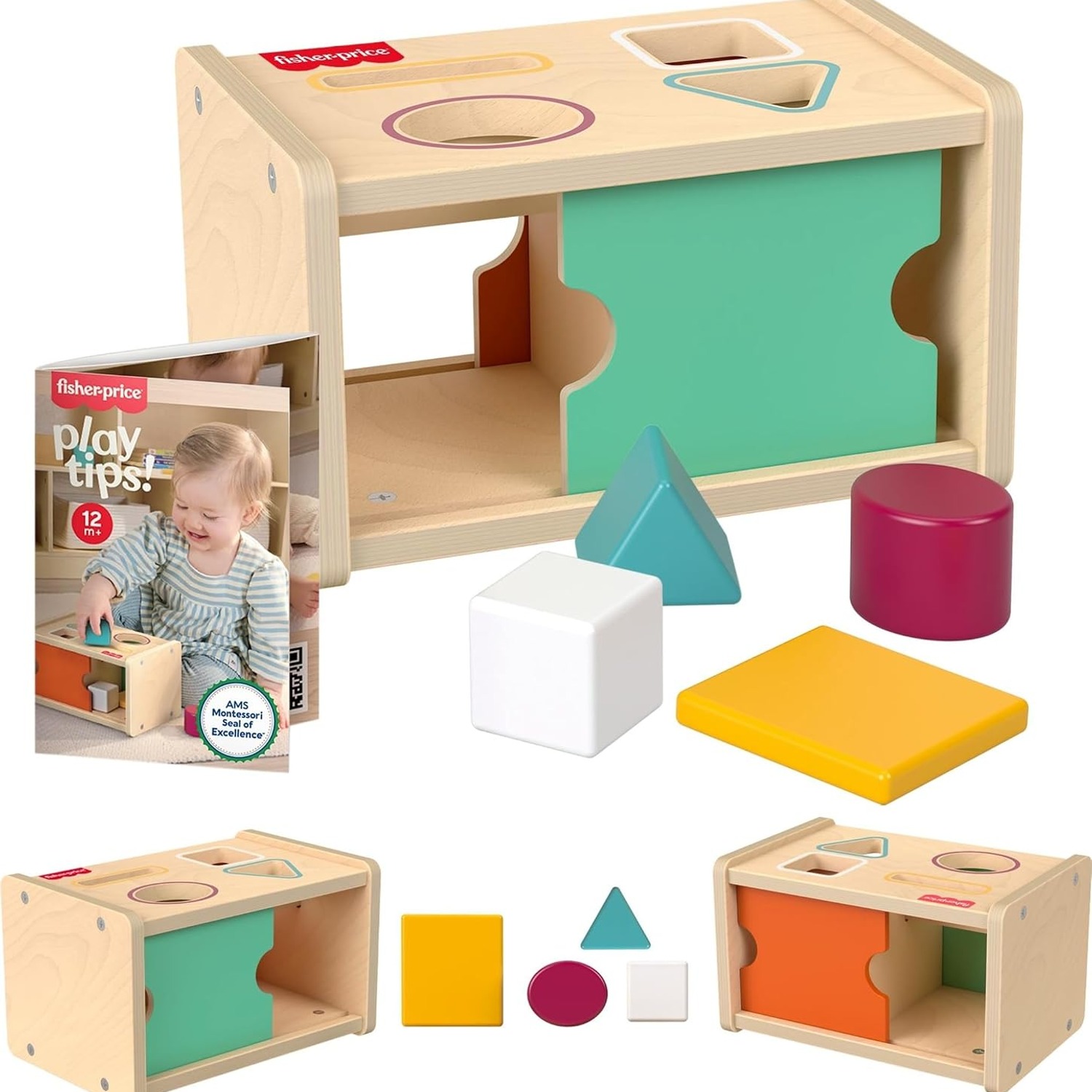
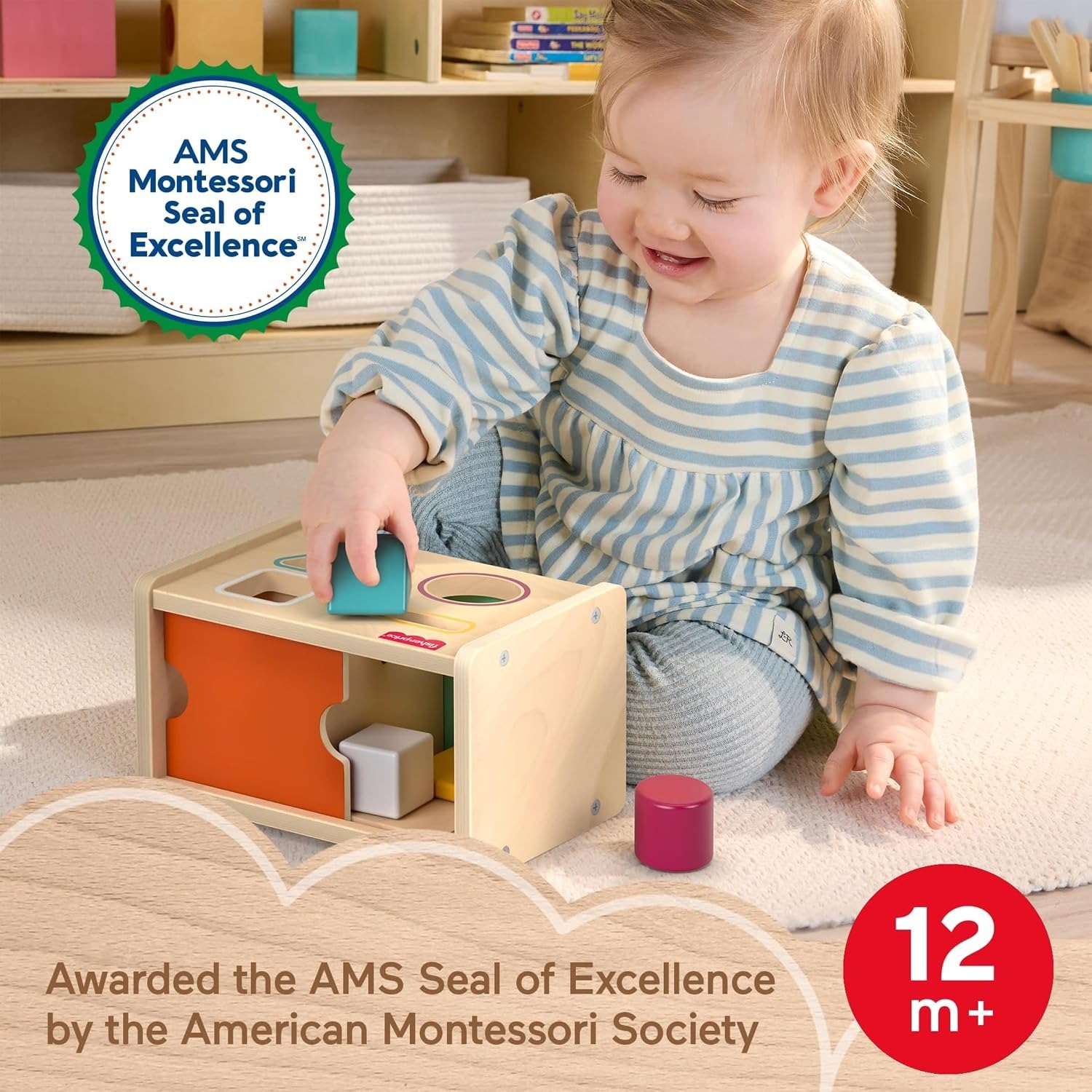
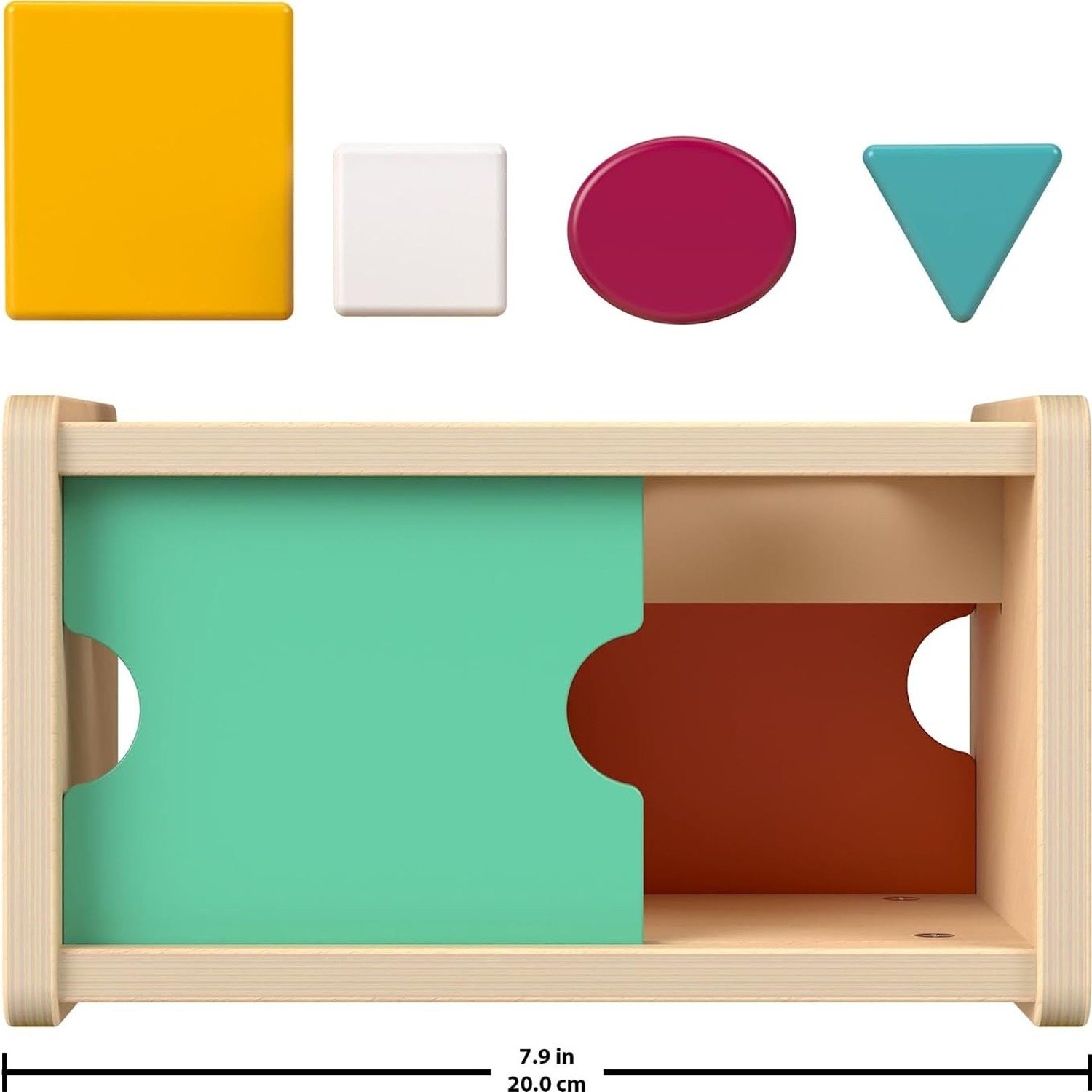
The Wooden Sort & Find Object Permanence Box adds shape matching to this familiar game. It includes four shapes and a box with sliding doors on either side. For a child who likes putting things in and taking them out, it offers a focused indoor toddler activity.
It is designed for ages 12 months and up. That is the starting point for choosing it, rather than a promise that every one-year-old will use it in the same way.
How the sorting and finding activity works
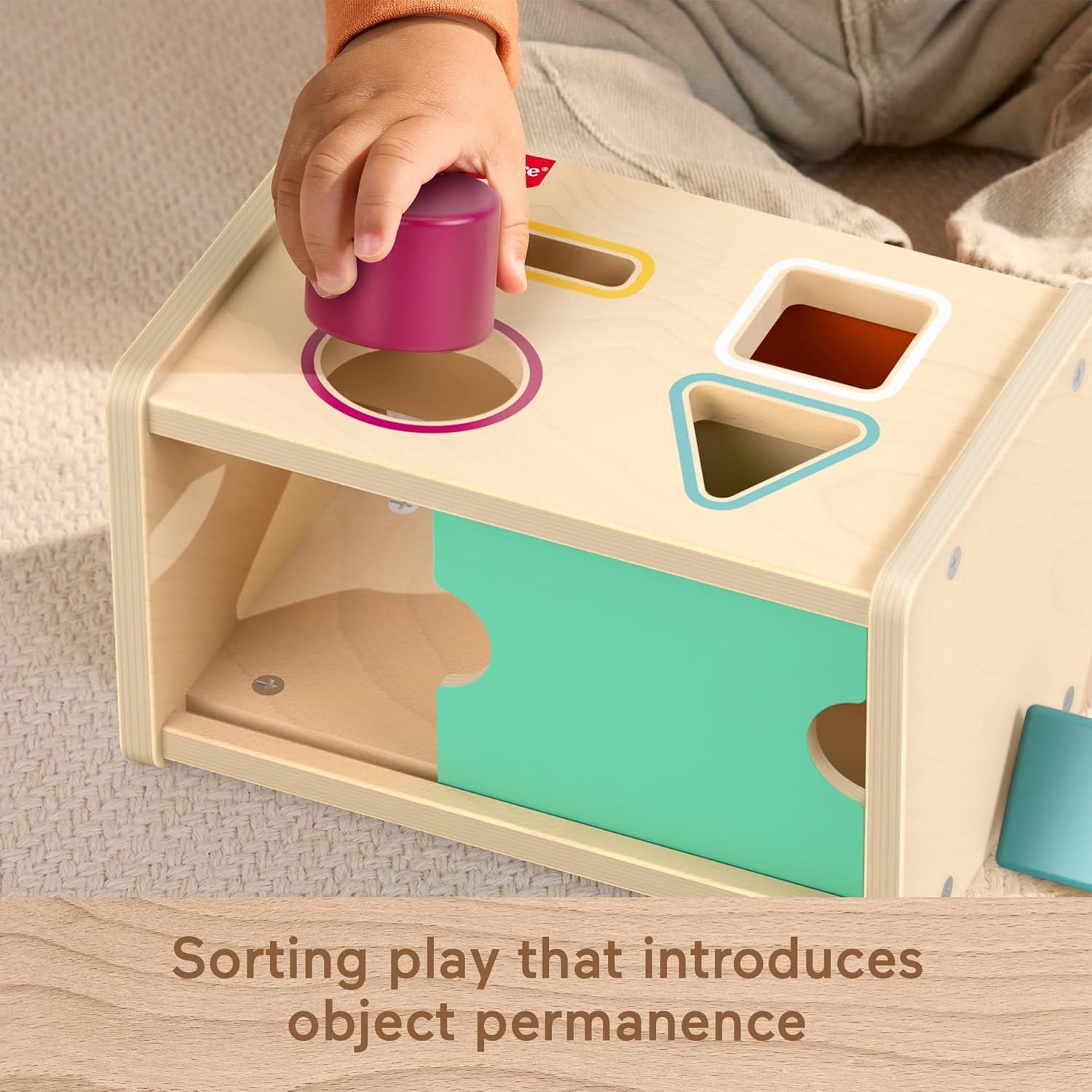
The basic sequence is easy to show. Pick up a shape, match it to the correct slot and place it inside. Then slide a door open to find it again.
There are two parts to the activity. Matching asks the child to look at the piece and the opening. Finding asks them to look for something that is no longer visible. Both can happen in one short play session, but there is no need to teach both at once.
A child may first be more interested in opening and closing the doors. Another may want to repeat the posting action with your help. Let that interest guide where you begin.
This is a manual sort and find toy. No batteries are needed, and no assembly is required. The child supplies the movement, while an adult can help with a slow demonstration when needed.
What object permanence means in everyday play
Object permanence means understanding that something still exists even when it is out of sight. You do not need a formal lesson to bring that idea into play.
With this box, the shape goes inside and can be found through a sliding door. The missing object has a clear place to return from. That makes the box useful for a simple round of “Where did it go?” followed by a chance to look.
Keep your language short. You might name the shape, watch it disappear and invite your child to find it. Then pause. The pause gives them room to respond rather than watching an adult do every step.
A peekaboo learning toy is not a test of development. Enjoying the doors, watching your demonstration or repeating just one action can all be part of exploring it.
Shape matching gives hands a separate task
This wooden shape sorter also has a practical matching element. The child must bring a piece towards a slot and work out how it fits.
That action offers practice with hand-eye coordination, one of the toy's stated learning goals. It also gives a reason to look closely at shapes rather than only carrying or dropping them.
Try to resist correcting every attempt straight away. If your child is comfortable, allow a little time to turn the piece and try again. If they become frustrated, show the action or simplify the activity.
For toddler fine motor play, the point is the chance to handle and move the pieces. There is no need to count successful turns or expect a particular result after a set number of sessions.
Who this box is likely to suit
The manufacturer's age recommendation is 12 months and up. Within that range, interests and confidence will vary.
This toy is worth considering for a toddler who enjoys posting objects, opening small doors or looking for hidden things. It may also appeal to families who want a battery-free toddler toy for shared floor play.
The set has one box and four shapes. That gives you a defined group of pieces to bring out and put away, rather than a large assortment to sort through before starting.
It is listed for indoor use. Choose a clear, dry area where the child can reach the box comfortably, and supervise the activity. Keep other small objects out of the play space so the included pieces are easy to track.
Understanding the Montessori connection
Families searching for a Montessori sorting box often want a hands-on task with a clear action and result. Here, a shape is matched and posted, then found again.
This model received the American Montessori Society Seal of Excellence in 2025. That is a specific recognition stated in the product information, rather than just a style label added to the name.
At home, you can keep the approach simple. Show a small action slowly, give the child a turn and avoid making every moment an instruction. The included play lab tip card provides further play ideas.
You do not need to recreate a classroom or buy a whole set of matching activities. Start with what your child wants to explore and use the supplied guidance when it is helpful.
Check the contents, not just the search phrase
Toy names can overlap. A search for a wooden ball drop toy may show both single-ball posting toys and boxes with several sorting pieces.
This record lists one box and four shapes. It does not name each shape or confirm that a ball is included. If you specifically want a ball-and-tray activity, do not assume this set has that layout.
The defining feature here is the combination of shape slots and sliding doors. Compare that with the action you want your child to explore.
Looking closely at the listed contents helps avoid a gift that is similar to what you wanted but not quite right. It also makes comparisons between different toddler learning toys more useful.
Size, materials and practical details
The listed dimensions are 13 cm long, 20 cm wide and 11.2 cm high. Weight is 450 g. Use those measurements to check your play area and storage space rather than judging size from a product photograph alone.
The detailed specifications list wood and a multicolor finish. The supplier also describes wood from Forest Stewardship Council-certified sources and non-toxic, water-based paints.
Those details do not remove the need for normal care and inspection. Check the condition of the box and shapes before use, and follow the supplied safety instructions.
Country of origin is not specified in this record. If that detail affects your purchase, ask for confirmation rather than making an assumption from the brand name.
Start small and keep the pace relaxed
For a first session, place the box within comfortable reach and offer one shape. Show where it goes, then slide a door open to find it.
After that, wait. Your child may copy the action, reach for the door or pick up the piece for a closer look. You can respond to what they do without turning it into a lesson plan.
When one shape feels familiar, offer another. Adding pieces gradually can make the choices easier to follow. All four do not have to be in use from the start.
If interest fades, put the activity away. A short, pleasant session is enough. The toy can come back another day without pressure to finish a task or master every slot.
Care and storage between sessions
Follow any cleaning directions supplied with the toy. For general surface care, a soft cloth lightly dampened with water is a sensible starting point. Dry the parts promptly and avoid soaking them.
Check the doors and shapes for damage before play. If a piece is broken or the toy no longer works as intended, stop using it until you have suitable advice.
After the session, gather all four shapes and store them with the box in a dry indoor place. A quick piece count makes the next setup easier and helps you notice anything missing.
Do not assume the wooden components are suitable for a dishwasher, prolonged water exposure or strong cleaning products. Those methods are not supported by the supplied record.
Buying it as a gift
As a first birthday learning gift, the box matches the manufacturer's starting age of 12 months. Still, check with the caregiver before buying. They may already have a shape recognition toy or know that the child currently prefers a different kind of play.
Consider the practical side too. The listed measurements help the recipient judge storage, while the absence of batteries means there are none to buy for setup.
Review delivery information at checkout, especially if you need it for a particular date. This record does not give a fixed shipping lead time. Read the storefront's returns policy as well, rather than assuming that every gift can be returned under the same conditions.
The short version
Choose this object permanence box if you want an indoor sorting-and-finding activity for a child aged 12 months or older. It combines four shapes, matching slots and sliding doors in a manually operated wooden toy.
Its value is in the repeatable action. Post a piece, look for it and try again. Start with a little help, follow your child's interest and leave plenty of room for discovery at their own pace.