
The complete guide
A Parent's Guide to Choosing Wooden Lacing Beads
When little hands want something to do
Finding a quiet activity can be harder than it sounds. Some toys need a long setup. Others give children only one way to play. Wooden lacing beads offer a simple task that can change with a child's interest, from sorting a few pieces to threading a chosen sequence.
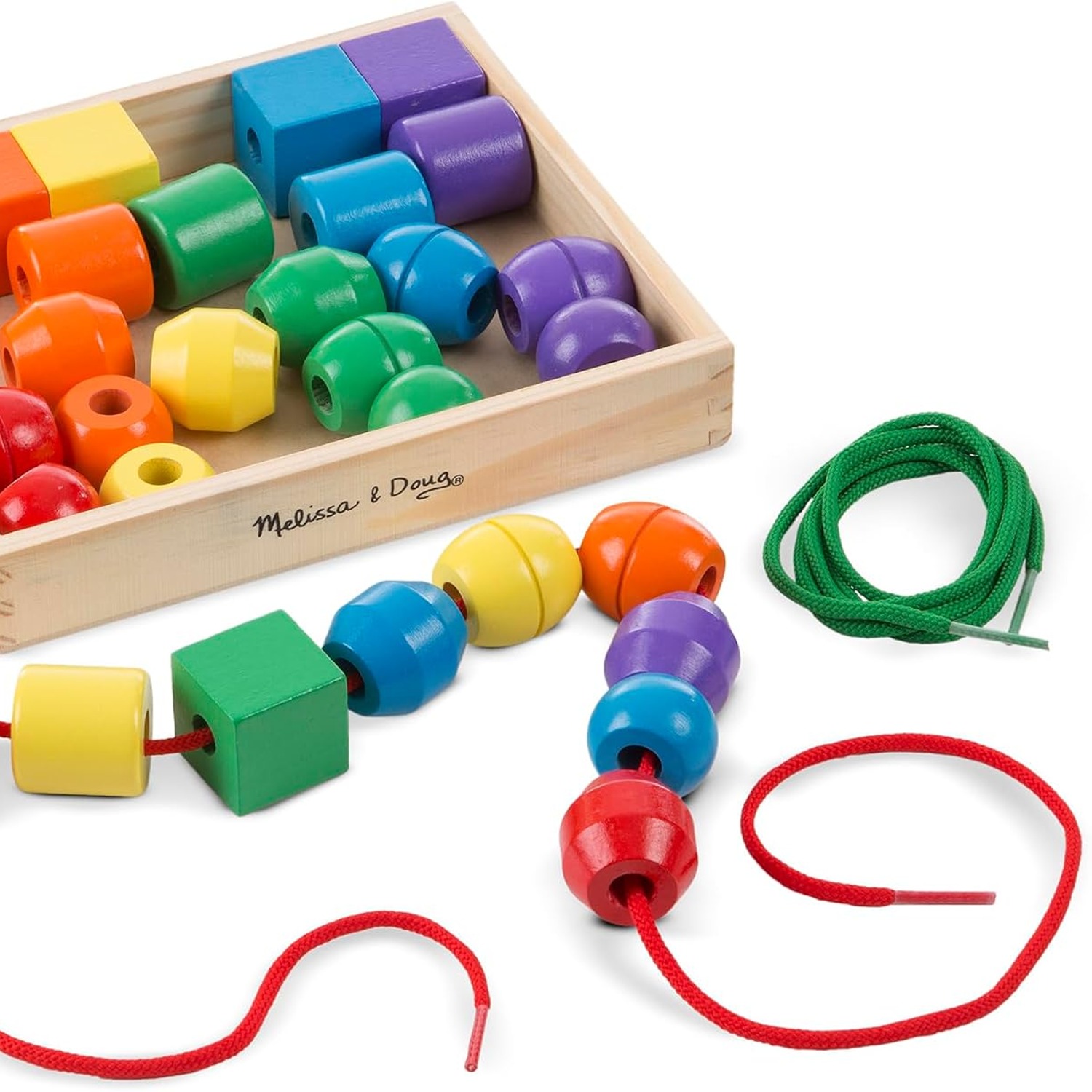
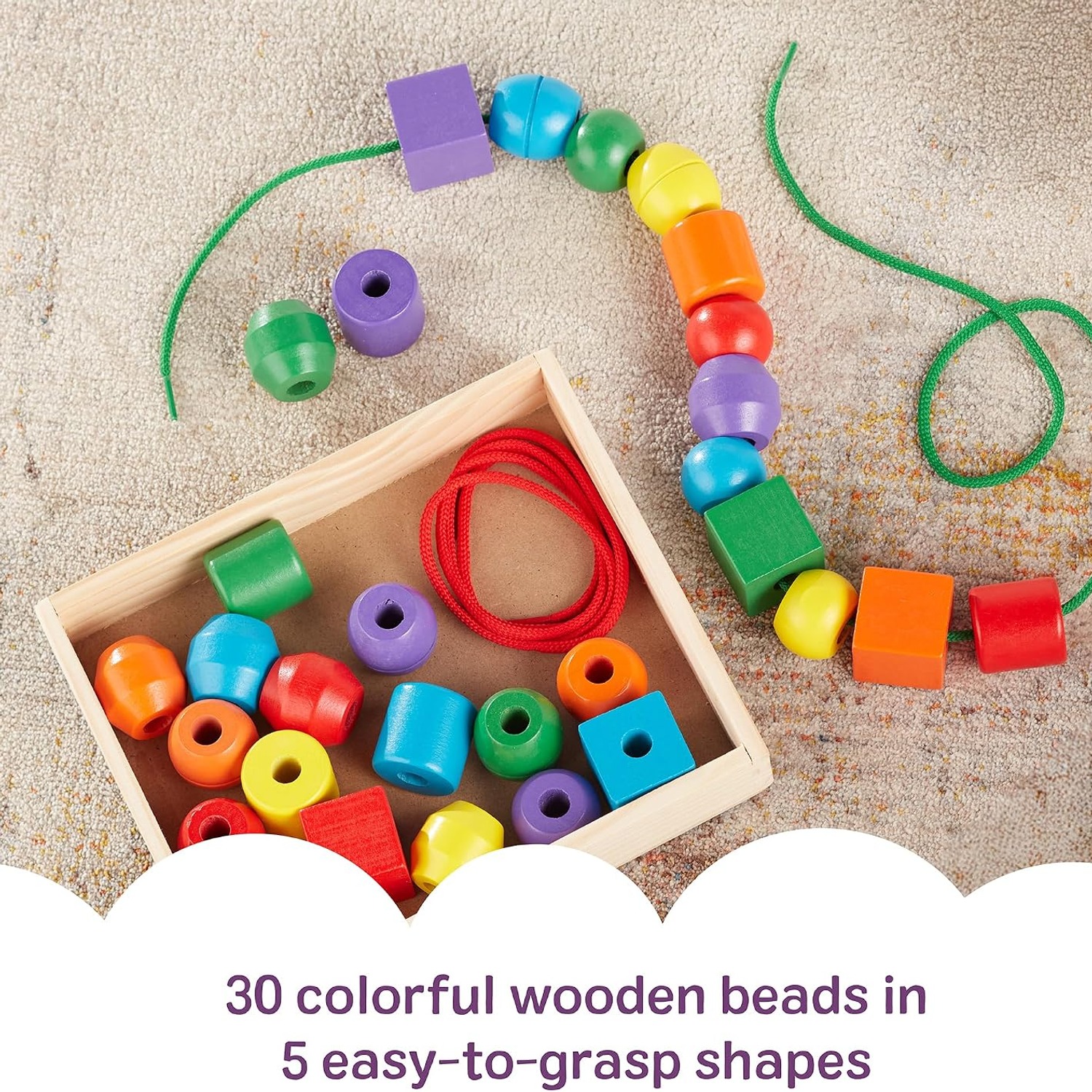
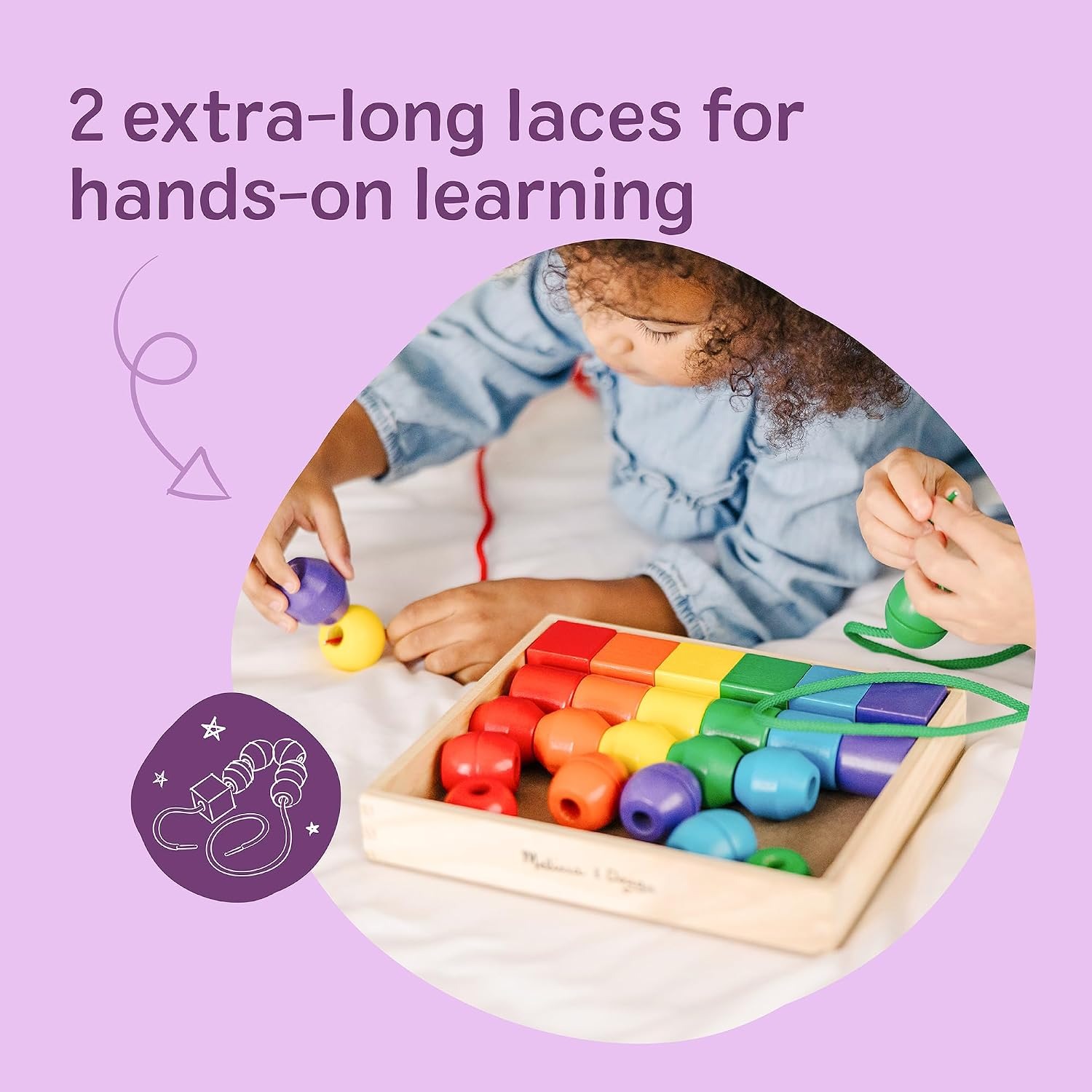
This set contains 30 wooden beads in six colors and five shapes, along with two long laces. It gives children a small collection to explore rather than a finished design to copy. One session might focus on matching. Another might be about choosing a favorite order.
The play guidance recommends ages three and older. There is conflicting age information in the scraped details, so check the actual packaging before use. Loose beads and laces call for adult supervision, and this should not be treated as a baby toy.
How a lacing activity works
The basic action is easy to show. Hold a bead, bring the lace to its opening, guide it through and pull. For a child learning the movement, each part can take thought and effort.
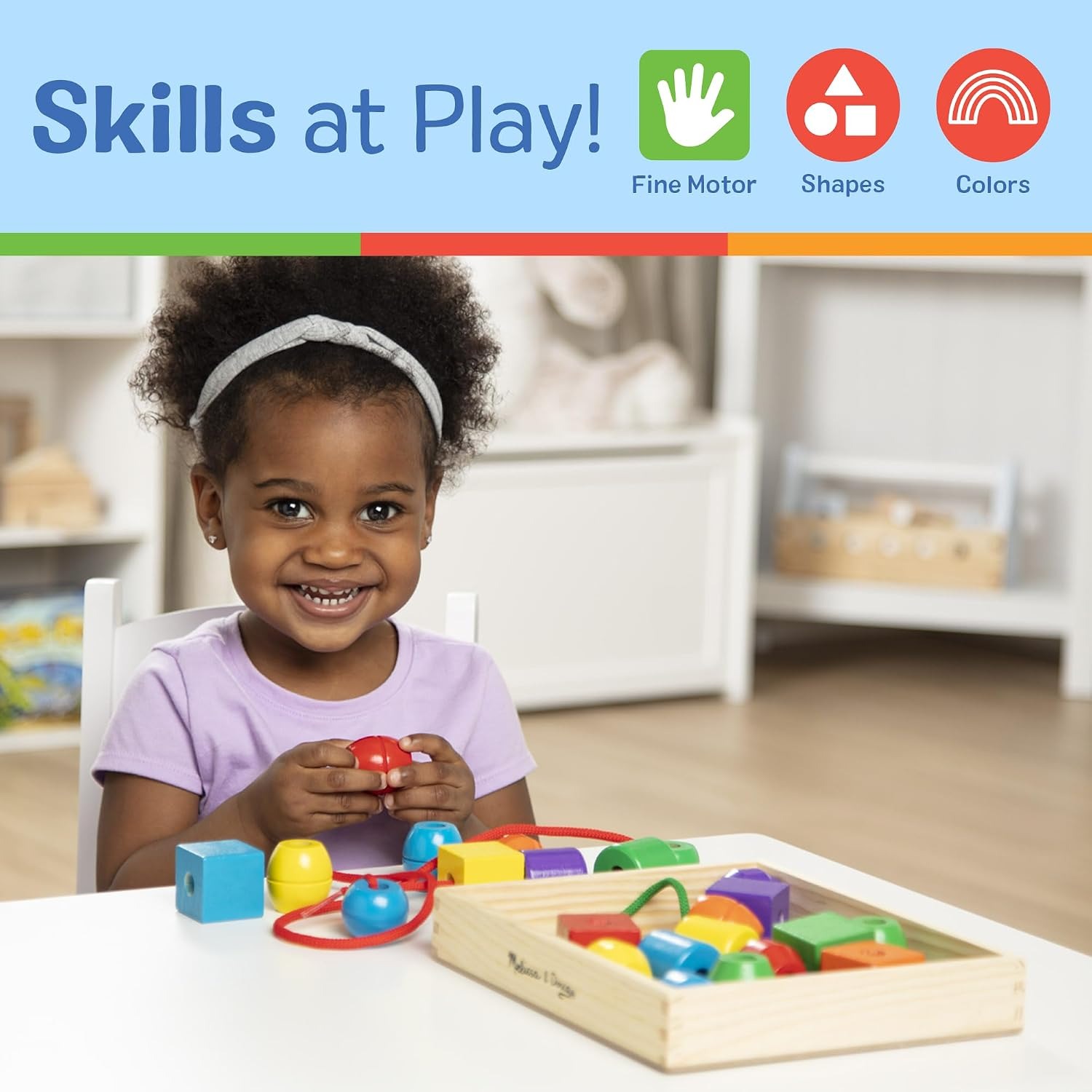
Using both hands for different jobs is part of the activity. One steadies the bead while the other moves the lace. Their eyes help line up the pieces. That makes this a hand-eye coordination toy with a clear, repeatable task.
There is no need to fill a lace. A few successful attempts can be enough for a first session. If threading feels frustrating, put the laces aside and explore the beads through matching or grouping instead. Coming back another day is fine.
The set is manual and needs no batteries. There are no electronic prompts to follow, so the pace comes from the child and the adult sharing the activity.
What this set gives you
Thirty beads provide pieces for several kinds of play without requiring a set outcome. Six colors allow children to gather matching groups. Five shapes add another way to compare the pieces, even when they are not threading.
Two laces are included. An adult could use one to demonstrate while a child tries the other. They also give two children a starting point for a supervised shared activity, with the beads divided between them.
The supplied details describe the beads as chunky and wooden. They do not provide individual bead measurements, the wood species or the lace material. If those details matter to your choice, ask for confirmation rather than judging size from a photograph.
The listed overall dimensions are 22.5 × 18.5 × 3.3 cm, with a weight of 0.59 kg. Those measurements should not be read as the size of each bead.
Who it may suit
A preschool lacing activity may appeal to a child who enjoys picking up small objects, arranging things or copying simple hand movements. It can also suit children who like to make their own choices about color and order.
Interest matters as well as age. Some children want to repeat the same action for a while. Others prefer sorting or pretend play. This set offers those options, but no toy guarantees a child's attention or a particular skill gain.
For a child who still puts toys in their mouth, loose beads are not an appropriate choice. Follow the packaging warnings and consider their current habits, not only their birthday.
Adults looking for a screen-free preschool toy may appreciate the simple setup. Still, screen-free does not mean supervision-free. Choose a time when someone can stay nearby and watch how the pieces and laces are being used.
Choosing between threading sets
Start with age guidance. A search for a threading toy for toddlers can return products for very different stages. The word “toddler” in a search heading is not a substitute for the product's safety instructions. Here, the supplied play guidance is three years and older.
Next, look at the contents. This wooden bead set lists 30 beads and two laces, with variation in both color and shape. That variety is useful if you want sorting and matching activities as well as threading.
Consider what you still need to know. Individual bead size, lace length and finish details are not specified in this record. These may be important when comparing sets for a particular child.
The best bead threading toy for your family is one that fits the child's age, interests and level of supervision. A larger piece count is not automatically better. Sometimes a small selection on the table makes an activity easier to approach.
A gentle first session
Begin on a clear indoor surface where dropped beads will be easy to find. Put out a few pieces and one lace. Keeping the rest aside can make the choices feel more manageable.
Show the action slowly without a long explanation. Let the child see where the lace goes and how you pull it through. Then offer a turn. If they ask for help, steadying the bead may be enough.
Try not to correct every choice. A child may want two matching pieces together or may select beads with no visible pattern. Both are reasonable ways to explore. The aim is to give them a task they can try, not to produce a neat result for an adult.
End while the activity is still comfortable. There is no required session length. A short attempt followed by tidying away can be more useful than pressing on when interest has gone.
Sorting and patterns without pressure
A color sorting beads activity can begin with a simple invitation to find two pieces that match. Once that feels familiar, ask whether more belong with them. There is no need to use all six colors at once.
For a shape sorting activity, focus on how pieces look rather than testing names. Ask what seems alike or different. Children can compare the beads even if they do not yet know the words adults use for each form.
Patterns add another option. Place a short sequence on the table and ask what could come next. Keep it easy enough that the child can see the idea. They can then thread the sequence or leave it as an arrangement.
Creative bead play need not have a correct answer. If the child changes the pattern, ask about their choice rather than treating it as a mistake. This keeps the activity open to their ideas.
Sharing the activity
The record lists one or more players. With two laces, this set can be used for an adult-and-child demonstration or a shared session between children.
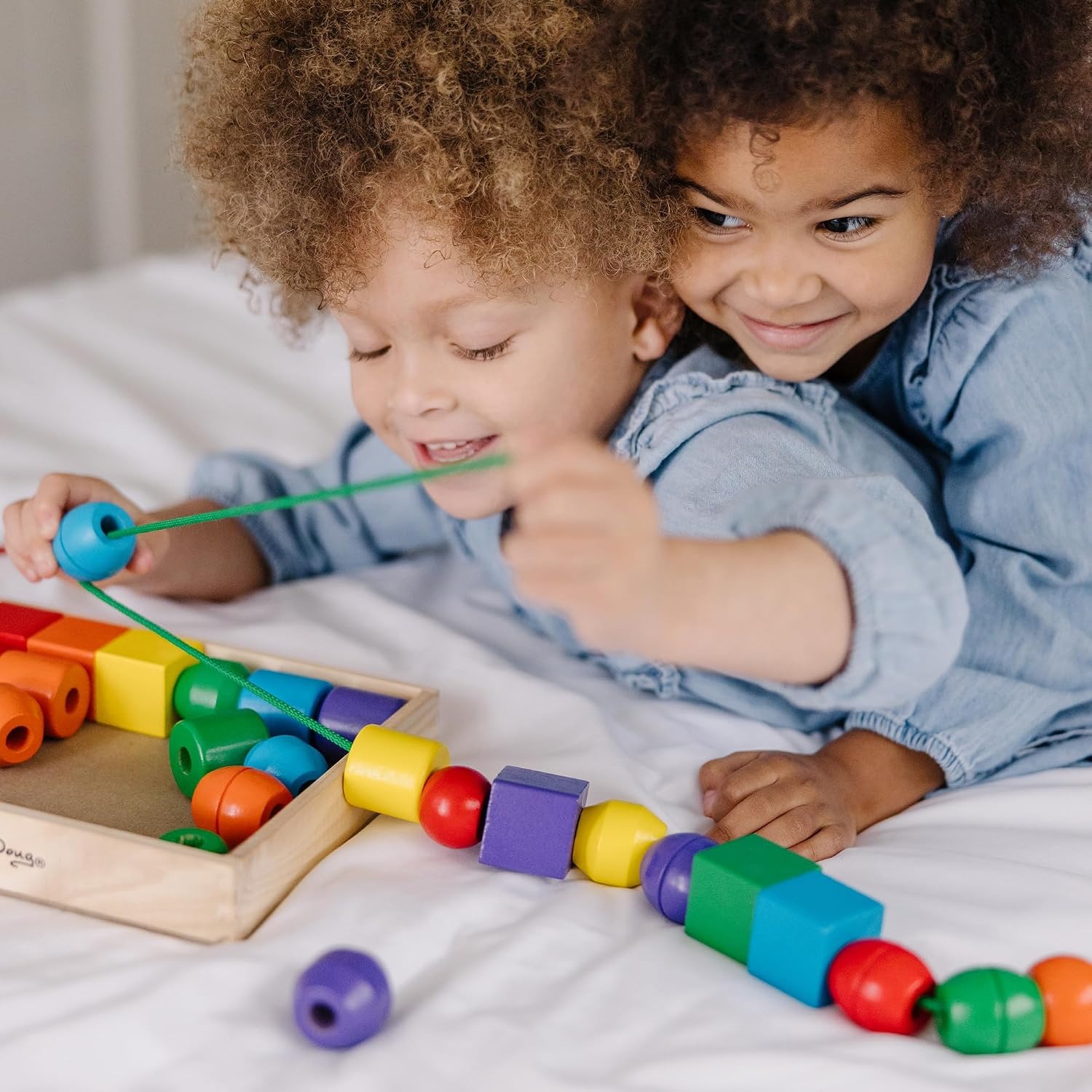
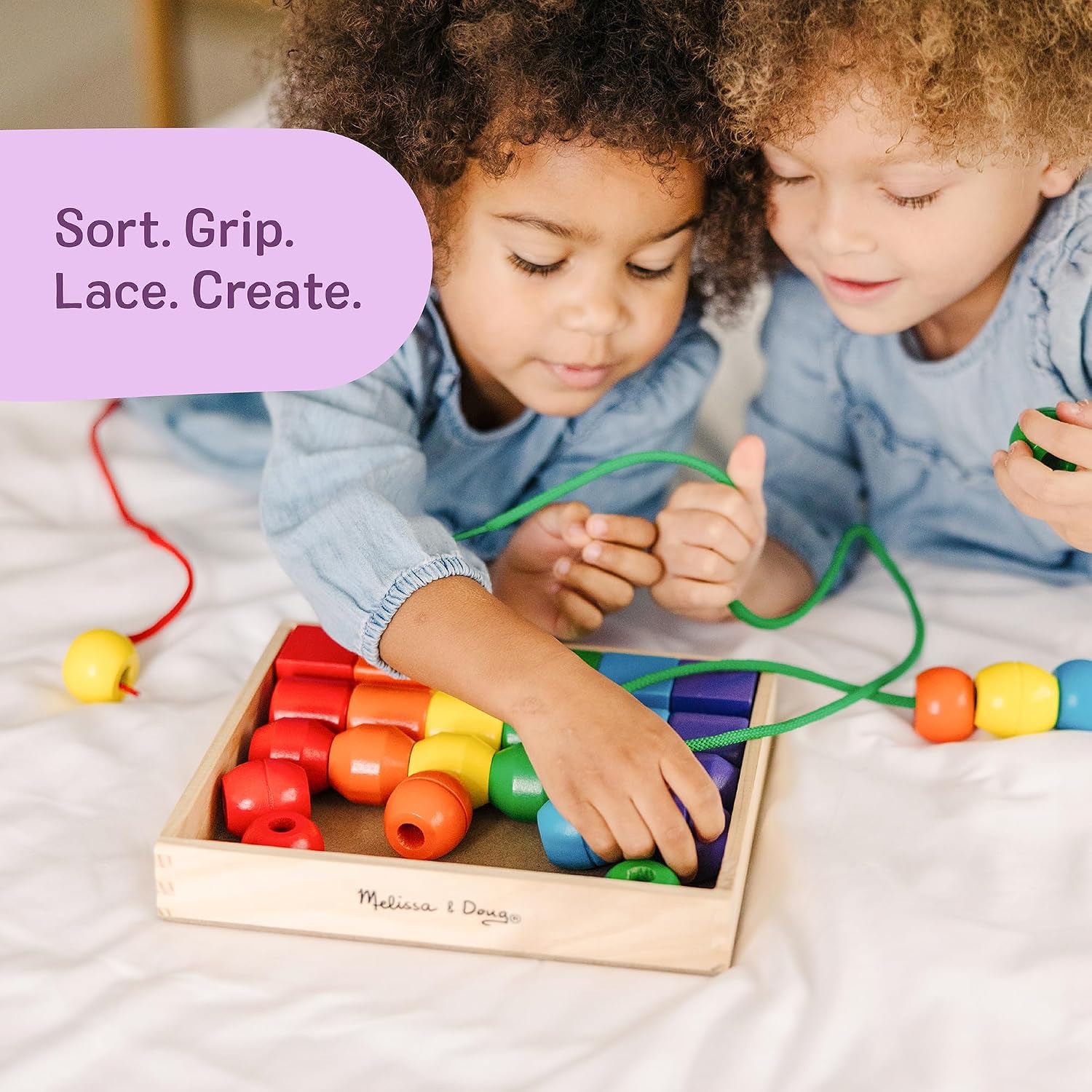
For shared play, divide some beads before starting. Each child can choose an order, or they can take turns selecting a piece for a common arrangement. Watch for frustration if one child wants a piece another is using.
Pretend jewelry making is also mentioned in the supplied activity ideas. Keep it as supervised tabletop play. Do not place the laces around a child's neck or leave threaded strings accessible to younger children.
You may see sets like this described as a Montessori-style threading toy. That phrase can describe the hands-on approach, but this record does not provide Montessori certification. Choose it for the activity it offers rather than assuming a formal endorsement.
Care and safe storage
Read the instructions supplied with the set before cleaning. General care for wooden toys means avoiding soaking and using a soft, lightly damp cloth when needed. Let the pieces dry before putting them away.
Check the beads and laces before each session. Look for damage, wear or anything that could make a piece unsuitable for play. Remove damaged parts rather than trying to continue with them.
Tidying is worth planning from the start. Keep a suitable container nearby and gather every loose piece after use. Look under chairs and around the play surface, especially if younger children share the room.
Store laces and beads out of their reach. A toy that suits a supervised preschool activity may still be unsuitable for a younger sibling who finds it later.
Buying it as a gift
An educational gift for preschoolers works best when it matches what the child enjoys. Ask whether they like making, sorting or hands-on table activities. Also check with their caregiver about loose pieces and storage.
This set needs no batteries or assembly, which keeps those parts of setup simple. It still needs an adult to read the safety guidance and introduce the activity.
Before ordering, check the storefront's delivery estimate and returns policy. No delivery timeframe or product-specific return window is supplied in this record. If the gift needs to arrive for a particular date, confirm that separately.
The short version
Wooden Lacing Beads offers 30 wooden beads, six colors, five shapes and two long laces for supervised indoor play. Children can thread, sort, compare and choose their own arrangements.
Use the three-years-and-older play guidance as your starting point, then check the packaging warnings. Start with a few pieces, keep the task relaxed and let the child's interest guide the next activity.