
The complete guide
Choosing a Wooden Pop Up Toy for Hands-On Toddler Play
A simple activity for curious little hands
Finding a toy for a young child can be harder than it looks. Some activities ask for skills they have not yet developed. Others have so many features that it is difficult to see what the child is actually doing. A simple action with a clear result can be a useful place to start.
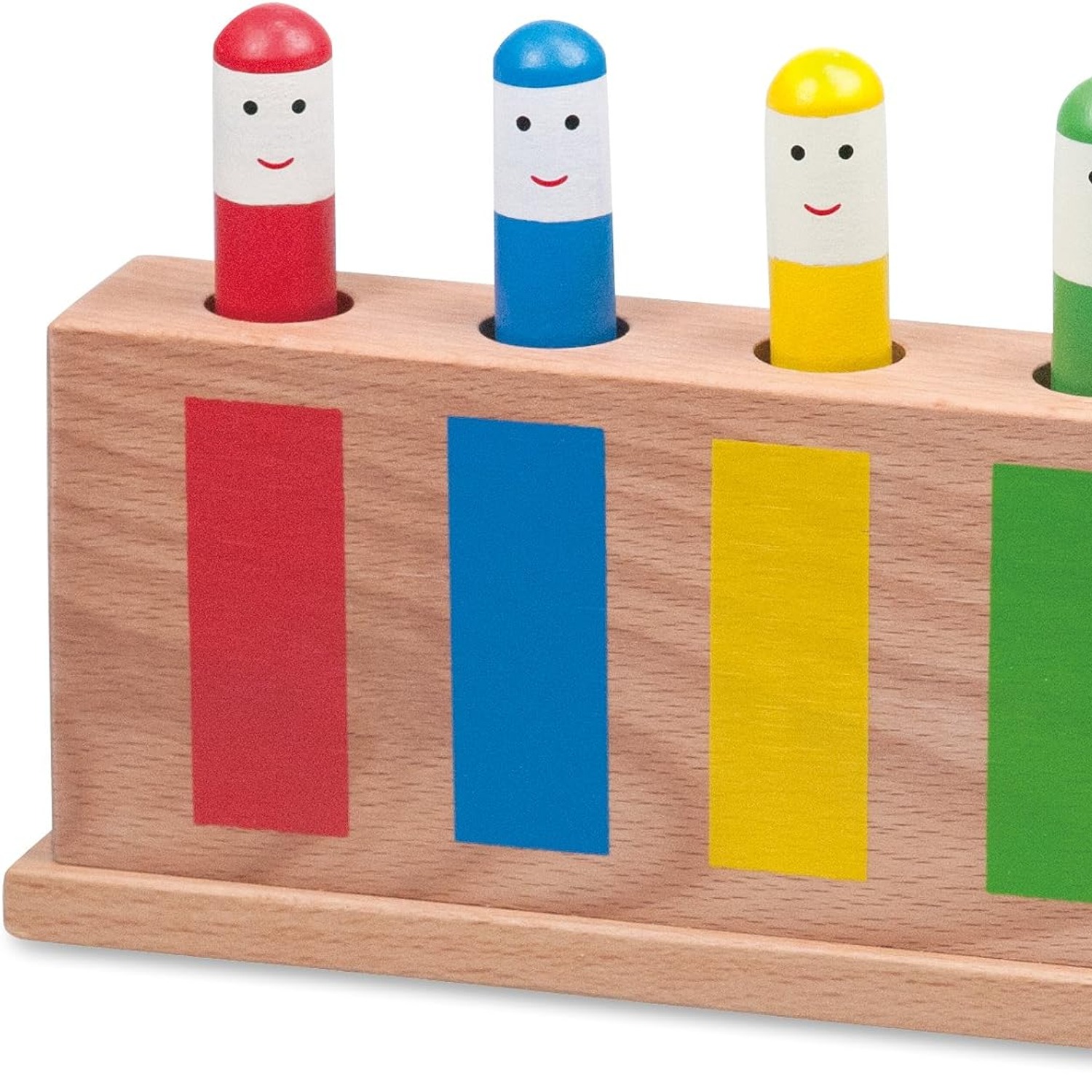
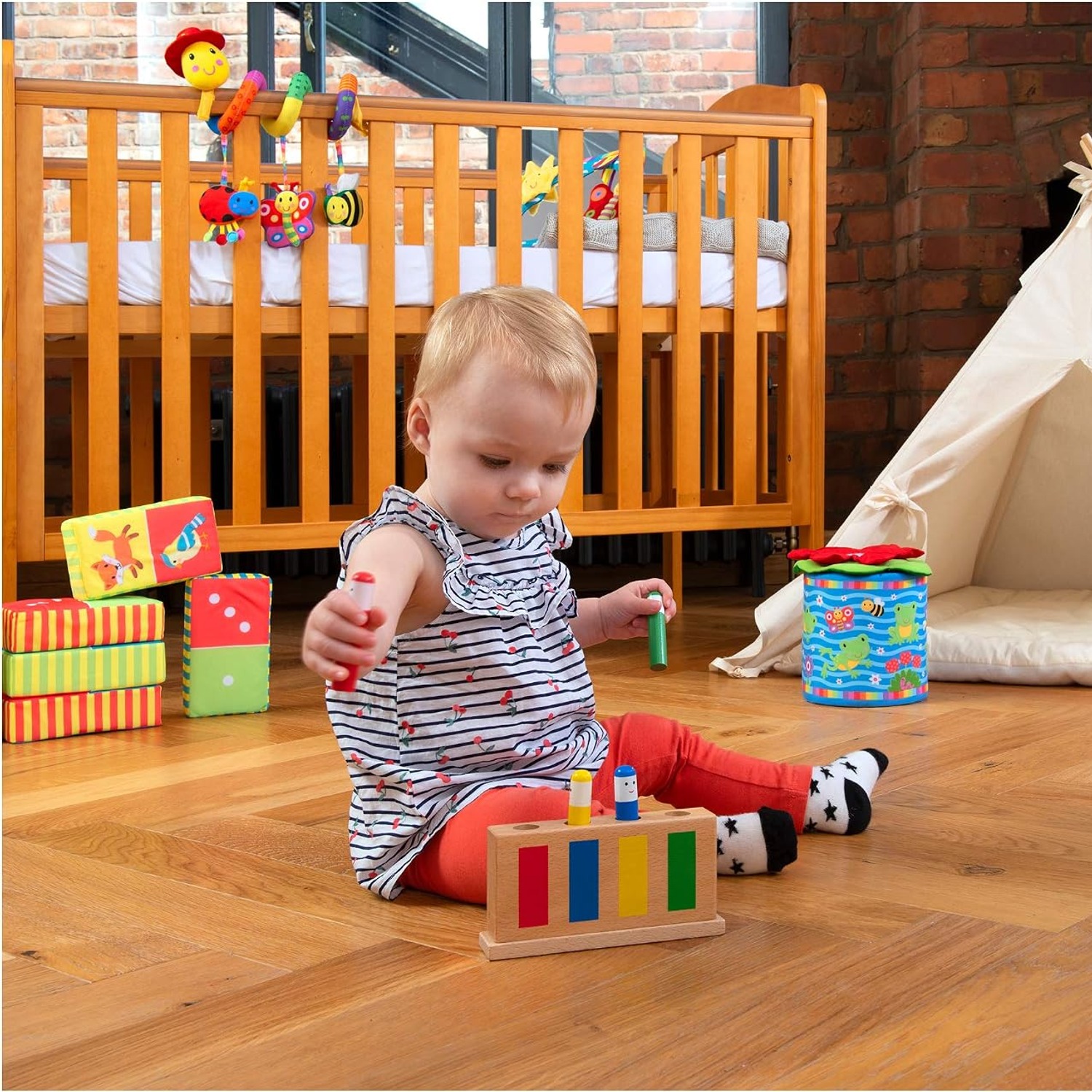
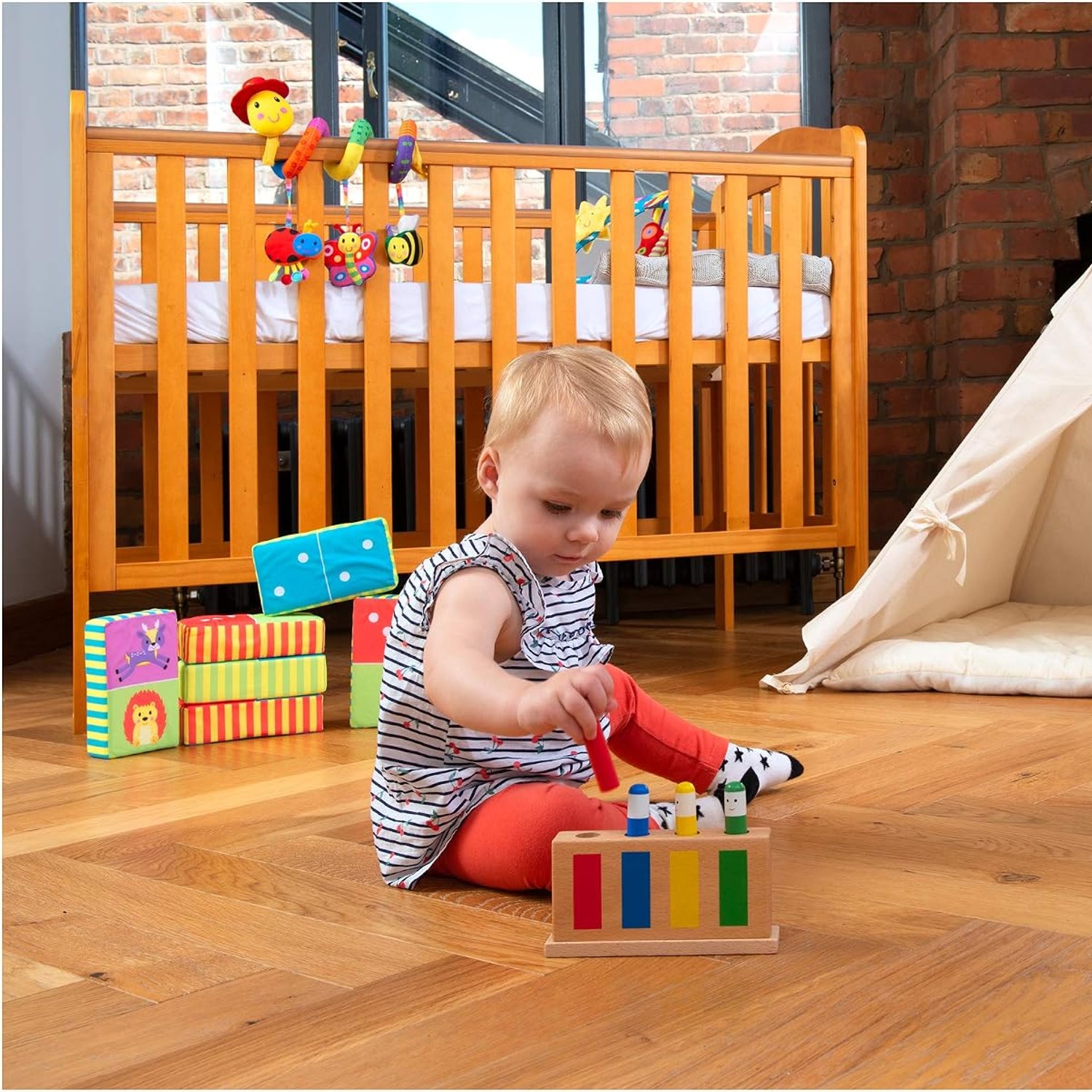
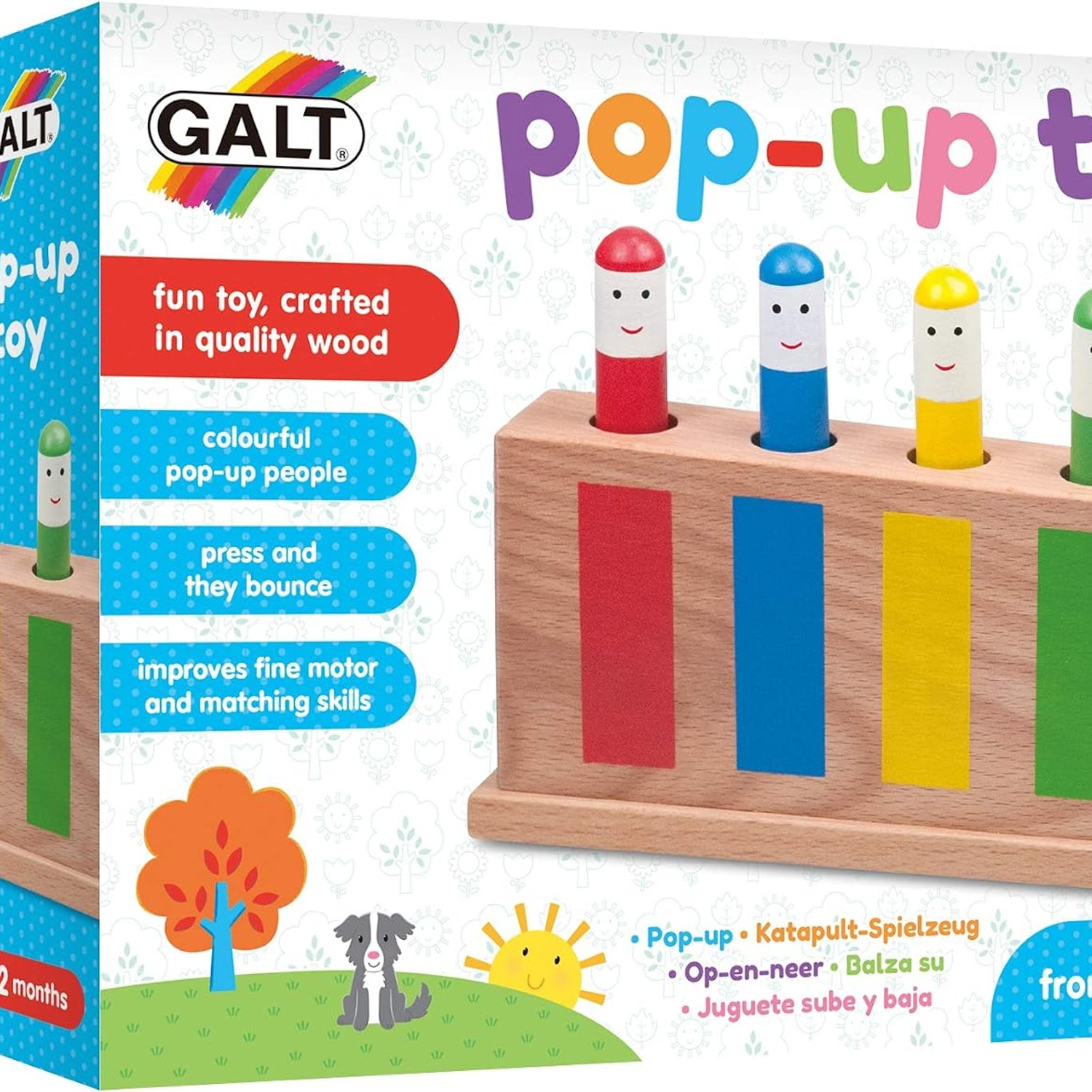
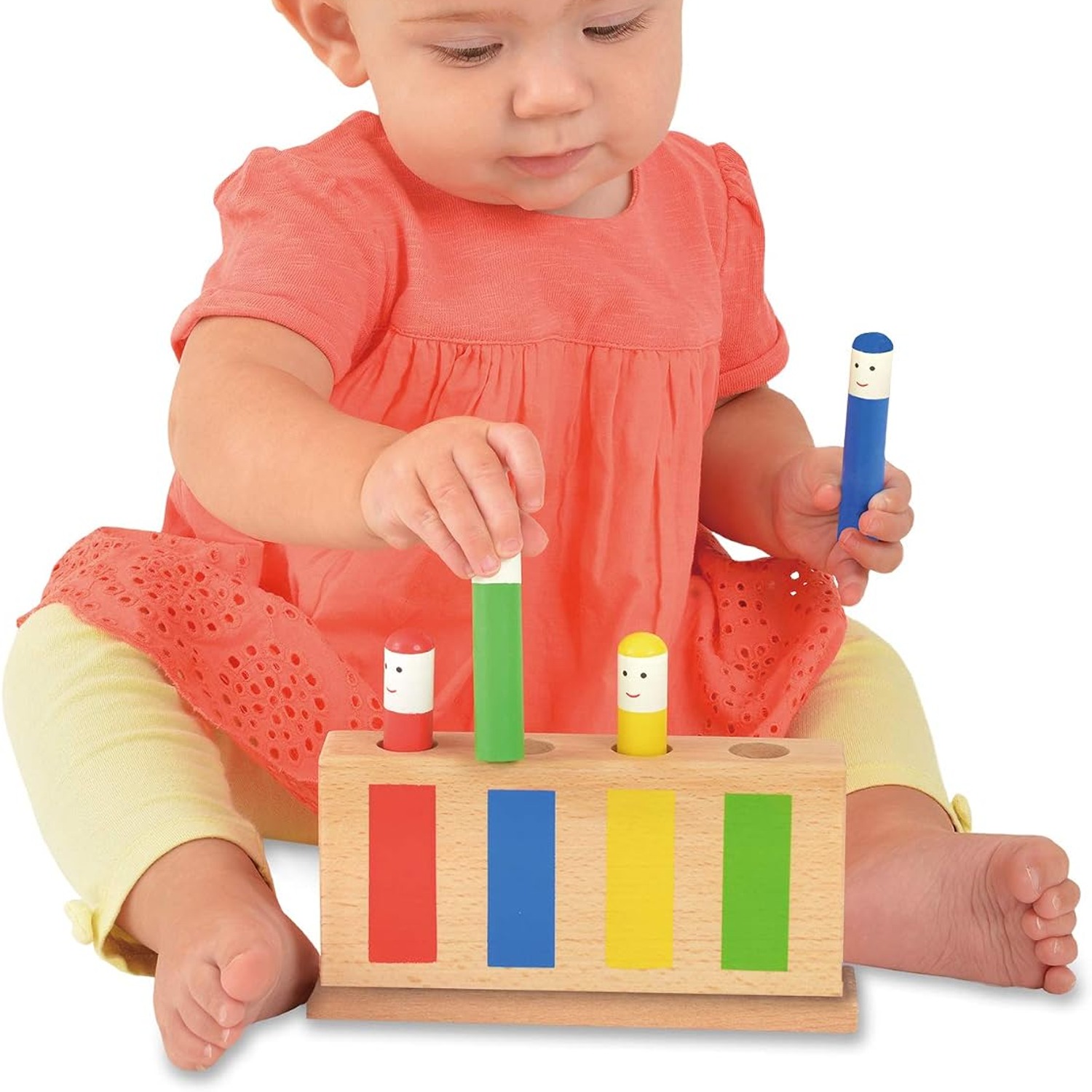
The Wooden Pop Up Toy offers that kind of play. It has four colorful wooden figures in a peg holder. The figures bob up and down on concealed springs, giving children movement to watch as they press and explore.
There is no screen to follow and no battery supply to keep ready. The interest comes from the child's own action. For a toddler who likes pressing things and watching what happens, that may be enough to invite another try.
How the press-and-pop action works
The idea behind this cause and effect toy is easy to understand. A child presses a figure and sees it move. An adult can show the action once, then pause to let the child respond.
At first, watching may be the main attraction. Later, a child may reach towards a figure or try pressing it themselves. Those are different ways of taking part. There is no need to rush towards a particular result or insist that all four figures get equal attention.
The concealed springs provide the bobbing movement described in the listing. This is a manual activity, not an electronic one. When comparing it with another baby push and pop toy, focus on the action your child enjoys rather than the number of extra features.
Who it is intended for
The manufacturer recommends this toy from 12 months, and the listed age range is 12 to 36 months. Adult supervision is required throughout play.
Age guidance is the starting point, not a promise that every child of that age will enjoy the same activity. Think about what your child currently chooses. Do they reach for things they can press? Do they watch moving objects closely? Do they enjoy repeating an action to see the same result?
Those interests can help you judge whether a wooden toy for 12 months and older is a sensible choice. If your child prefers a different activity, there is no need to force this one. Put it aside and consider trying again another time, within the supplied safety guidance.
What the toy can help children practice
Hand-eye coordination, color recognition and cause and effect learning are the educational objectives listed for this toy. The activity brings those ideas into a small, physical play space.
A child looks towards a figure, reaches for it and tries to press. Their hand may miss or slide away. Another attempt gives them another chance to connect what they see with what their hand does. That is practice, not a performance to score.
As a fine motor skills toy, it offers opportunities for small hand movements during play. It should not be treated as a test of development or a promise of faster progress. Children approach the same object in different ways, and their interest can change from day to day.
Bringing color words into play
The four colorful figures give you something clear to talk about. You can name the color of whichever figure your child is already watching. A short comment is often enough.
Try leaving space after you speak. A child does not have to repeat a color word or point correctly for the moment to be worthwhile. They may keep pressing, look towards you or move their attention to another figure.
A color recognition toy works well as part of ordinary conversation. Rather than asking a string of questions, describe what is happening. Keep the tone relaxed and let the play continue. The aim is to share words alongside an activity, not turn every press into a lesson.
Check the contents and measurements
The set includes one wooden peg holder and four wooden peg figures. No assembly is required, so there is no building stage listed before play.
The recorded dimensions are 20.4 cm long, 4.5 cm wide and 15.5 cm high. The listed weight is 0.31 kg. Use those measurements when thinking about a play surface or storage spot rather than judging size from a photograph alone.
Check that there is room around the toy for your child to reach comfortably while you supervise. A stable indoor surface is a sensible starting point. Keep the area clear enough that you can see the figures and notice if any part becomes damaged.
Understanding the material information
The supplier's product details describe wood, with a wooden holder and wooden peg figures. They also describe the toy as multi-colored.
The record does not identify the wood species, finish or country of origin. It does not give a specific safety certification. If one of those details is important to your buying decision, ask for confirmation rather than filling the gap with an assumption.
This matters when comparing wooden toys. A wooden appearance does not tell you everything about a product's finish or testing. Use the stated age guidance, supplied instructions and confirmed product information together when deciding whether it belongs in your child's play space.
A gentle way to introduce it
Start when your child is comfortable and ready to play. Place the toy on a stable surface, sit nearby and demonstrate a gentle press on one figure.
Then wait. It can be tempting to keep showing the action, especially if your child does not copy it at once. A pause gives them time to look and decide what to try. They might reach, watch or return to the same figure several times.
Follow their attention rather than directing every move. If they lose interest, end the session without fuss. An indoor toddler activity does not need a set length to be useful. A short, relaxed moment can be a better fit than a long session led entirely by an adult.
Comparing it with other activity toys
When choosing a wooden activity toy, start with the type of play you want. This one centers on pressing figures and watching spring-supported movement. It is not described as a puzzle, stacking set or electronic learning device.
Its manual operation may appeal if you want a battery-free baby toy. No batteries need replacing, and no assembly is listed. The focus stays on a physical action and its visible result.
Compare the age recommendation, contents and measurements with any alternative. Also consider your own role. This toy requires supervision, so choose it for times when an adult can remain nearby. A straightforward design does not remove the need for attentive use.
Care and checks between sessions
Follow any instructions supplied with the product before using a cleaning method. For general wooden toy care, a soft, slightly damp cloth is a sensible starting point. Dry the toy before putting it away.
Avoid soaking the wooden pieces or the spring mechanism. Do not assume that a wooden peg toy can go in a dishwasher or be cleaned with a strong household product. Specific cleaning treatments are not provided in this record.
Before play, check the holder, figures and accessible parts for damage. If anything is damaged, stop using it. Keep the set dry between sessions and check that all included pieces are accounted for when you put it away.
Choosing it as a gift
This may be worth considering as a first birthday wooden toy because its recommended starting age is 12 months. Still, checking with a parent or caregiver is helpful. They can tell you whether the child already has a similar activity or currently enjoys this kind of play.
Share the age guidance and supervision requirement with the recipient. If the gift is needed for a particular date, check delivery information before ordering. A supplier lead time is not specified in this record, so avoid assuming an arrival date.
Gift wrapping and return terms are also worth checking separately. The supplier details state No Warranty, while applicable consumer rights and storefront return policies are separate matters.
The short version
The wooden pop up is a four-figure, manual activity toy for supervised indoor play from 12 months. Its concealed springs create a bobbing action that supports simple exploration of cause and effect.
Choose it if your child enjoys pressing, watching movement and trying again. Check the measurements, follow the supplied guidance and keep play relaxed. The main appeal is easy to understand: a small action gives a visible result, with room for the child to explore at their own pace.